The Art of Rational Investing
In honor of Charlie Munger (1924–2023), whose insistence on intellectual honesty, multidisciplinary thinking, and the courage to wait for the perfect pitch transformed value investing forever.
"The big money is not in the buying and selling, but in the waiting."
— Charlie Munger
Why This Academy Exists
FairValueLabs was built on a single conviction: the Buffett-Munger framework for evaluating businesses is the most reliable path to long-term wealth creation ever developed — but it was never made accessible to ordinary investors.
Wall Street sells complexity. We believe the greatest investment minds in history — Graham, Buffett, Munger, Fisher — all converged on the same simple truths. This Academy distills their collective wisdom into a systematic framework that anyone can learn, practice, and apply.
Every tool on FairValueLabs — the Z-Score bankruptcy screener, the DCF fair value model, the moat rating system, the dividend safety grades — is a direct implementation of principles these investors spent lifetimes developing. We just wrote the code.
Three Pillars of Value Investing
Master these three concepts and you'll understand how Buffett and Munger think about every investment decision.
What Is Value Investing?
The complete beginner's guide to buying stocks for less than they are worth — and why patience is the real edge.
14 min read · History, framework, common mistakes
How to Analyze a Stock Before Buying
A six-step checklist: bankruptcy screening, intrinsic value, moat evaluation, dividend safety, classification, and the owner's mindset test.
16 min read · Practical, step-by-step framework
What Is an Economic Moat?
The five types of competitive advantage that separate great investments from value traps — and how to measure them from SEC filings.
15 min read · Buffett's key concept, deep dive
A Century of Value Investing
From a Columbia University classroom in the 1920s to the most successful investment track record in history.
Benjamin Graham begins teaching at Columbia
A young professor starts teaching a course called "Security Analysis" at Columbia Business School. His central idea is radical for the time: stocks are not lottery tickets — they are fractional ownership of real businesses, and they can be analyzed rationally.
"Security Analysis" published
Graham and David Dodd publish the 700-page bible of fundamental analysis. For the first time, investors have a systematic framework for determining what a stock is actually worth — independent of what the market says. The book introduces the concept of "intrinsic value."
"The Intelligent Investor" — margin of safety
Graham's masterpiece for individual investors introduces "Mr. Market" and the concept of margin of safety. Warren Buffett later calls it "by far the best book on investing ever written." Chapter 20 on margin of safety becomes the single most important chapter in investment literature.
Buffett starts his partnership
A 25-year-old Warren Buffett, fresh from studying under Graham at Columbia, starts Buffett Partnership Ltd with $105,100. He applies Graham's principles — buying "cigar butts" (mediocre companies at dirt-cheap prices) — and compounds at 29.5% annually for 13 years.
Buffett meets Charlie Munger
At a dinner in Omaha, Buffett meets a Los Angeles lawyer named Charlie Munger. It becomes the most consequential partnership in investment history. Munger's influence will gradually transform Buffett from a "cigar butt" buyer into a quality-focused investor.
See's Candies — the Munger revolution
Munger convinces Buffett to pay $25 million for See's Candies — a price Graham would have considered too high. But See's generates enormous returns on capital with minimal reinvestment. Buffett later calls it the turning point: "Charlie shoved me in the direction of not just buying bargains."
Coca-Cola — wonderful company, fair price
Berkshire buys $1 billion of Coca-Cola stock — a company trading at 15x earnings that Graham would have considered expensive. But Buffett sees an unassailable brand moat that will compound for decades. The investment grows to over $25 billion. The Munger doctrine is proven.
Buffett's annual letter defines "economic moat"
"What we are trying to do is find a business with a wide and long-lasting moat around it." This single sentence from Buffett's shareholder letter creates the vocabulary that the entire investment industry now uses. Moat analysis becomes the centerpiece of quality investing.
Charlie Munger passes away at 99
The investment world loses its most honest, most quotable, and most intellectually rigorous voice. Munger's legacy is not just the Berkshire track record — it's the mental models framework, the insistence on thinking in probabilities, and the courage to say "I don't know" when others pretend certainty.
FairValueLabs — the framework, automated
We take the Graham-Buffett-Munger principles — intrinsic value, margin of safety, economic moats, balance sheet safety — and build them into transparent, data-driven tools that any investor can use for free. Every number comes from SEC filings. Every formula is documented. No black boxes.
Giants of Value Investing
The intellectual lineage behind every tool on FairValueLabs.
Benjamin Graham
The Father of Value Investing
Invented security analysis, intrinsic value, and margin of safety. Security Analysis (1934) and The Intelligent Investor (1949) remain the foundation of everything we do.
"Price is what you pay. Value is what you get."
Warren Buffett
The Greatest Capital Allocator
Evolved value investing from buying cheap mediocre businesses to buying wonderful businesses at fair prices. Berkshire Hathaway has compounded at 19.8% annually since 1965.
"It's far better to buy a wonderful company at a fair price than a fair company at a wonderful price."
Charlie Munger 1924–2023
The Architect of Quality Investing
Buffett's partner for 60 years. Pay up for quality. Think in mental models from multiple disciplines. Have the discipline to do nothing when nothing is worth doing.
"Knowing what you don't know is more useful than being brilliant."
Philip Fisher
The Pioneer of GARP
While Graham focused on the balance sheet, Fisher focused on the business — management quality, R&D strength, and growth potential. Buffett says he is "85% Graham, 15% Fisher."
"The stock market is filled with individuals who know the price of everything, but the value of nothing."
John Templeton
The Global Contrarian
Bought 100 shares of every stock below $1 in 1939 during WWII panic. Templeton Growth Fund compounded at 14.5% for 38 years. Maximum pessimism is the best time to buy.
"The four most dangerous words in investing are: 'This time it's different.'"
Seth Klarman
The Modern Graham
"Margin of Safety" author. Baupost Group averaged ~20% over three decades while holding 30-50% cash. Proves the Graham-Buffett framework works in modern markets.
"Value investing is at its core the marriage of a contrarian streak and a calculator."
From Buffett-Munger to FairValueLabs
We didn't invent anything. We translated their principles into code.
Avoid Permanent Loss
Graham's Rule #1: don't lose money. Our Risk Audit uses the Altman Z-Score to screen every stock for bankruptcy risk — the single most destructive event for a portfolio.
Know What It's Worth
Buffett's "owner earnings" concept, automated. Our Fair Value Lab calculates intrinsic value using historical PE, DCF, and EV/FCF — three methods blended for robustness.
Demand a Moat
Munger's revolution: quality matters more than cheapness. Our Moat Ratings evaluate ROIC stability, margin trends, and switching costs — the quantitative fingerprint of competitive advantage.
Buy with Margin of Safety
Graham's central principle. Our Strike Zone requires all three green lights: undervalued + safe + moated. This is the Buffett-Munger checklist in one click.
Protect Your Income
Dividend safety matters. Our Dividend Safety grades every payout A through F based on coverage, consistency, and growth streak — so you don't get caught in a yield trap.
Know Your Category
Not everything is a value investment. Our three-tier classification — Value Investment, Value-Speculation, Pure Speculation — ensures you size positions based on what you're actually buying.
The Mental Models That Changed Everything
Charlie Munger believed that great investing requires thinking across disciplines — not just finance.
Inversion
"All I want to know is where I'm going to die, so I'll never go there." Ask "how do I avoid catastrophic losses?" Our Z-Score screener is inversion thinking applied to stock selection.
Circle of Competence
Only invest in what you understand. It's not about making the circle bigger — it's about knowing where the edge is. The Quiz on every stock page tests whether you truly understand the company.
Opportunity Cost
Every dollar in stock A is a dollar not in stock B. Munger always asked: "Is this the best use of Berkshire's next dollar?" The Strike Zone helps find the best opportunities.
Compound Interest
"The first rule of compounding: never interrupt it unnecessarily." 15% annual return for 30 years turns $100K into $6.6M. Moat investing maximizes compounding duration.
Second-Order Thinking
First-order: "This stock is cheap." Second-order: "Why is it cheap? Is the business declining?" Our value trap detection is second-order thinking encoded in an algorithm.
Patience
"The big money is not in the buying and selling, but in the waiting." Munger and Buffett spent most of their time doing nothing. Wait for the fat pitch.
Earn Your Value Investor Badge
Every stock on FairValueLabs has a 15-question assessment drawn from a pool of 50 company-specific questions. Score 70% or higher to earn the Certified Value Investor badge for that stock. Three tiers of achievement:
Qualified Investor
Score 70-79% — You understand the basics of this company's fundamentals.
Certified Investor
Score 80-89% — Strong command of the company's financials and competitive position.
Expert Analyst
Score 90%+ — You know this company as well as any professional analyst.
The Books That Built Value Investing
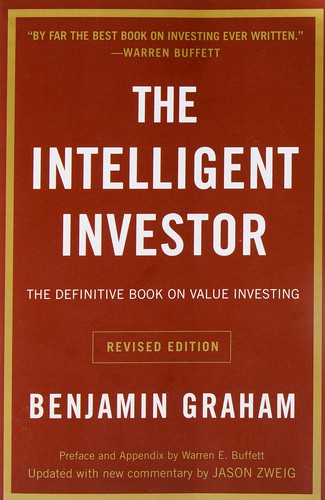
The Intelligent Investor
Benjamin Graham · 1949
The foundational text. Chapters 8 (Mr. Market) and 20 (Margin of Safety) are the two most important chapters in investment literature.
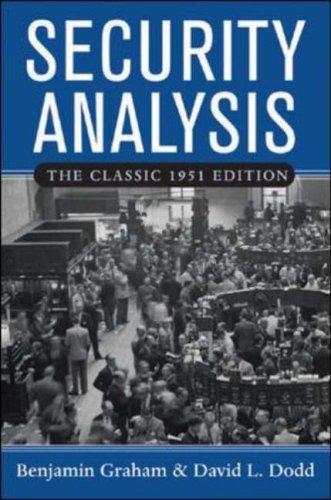
Security Analysis
Graham & Dodd · 1934
The 700-page technical companion. The definitive reference for balance sheet analysis and bond valuation.
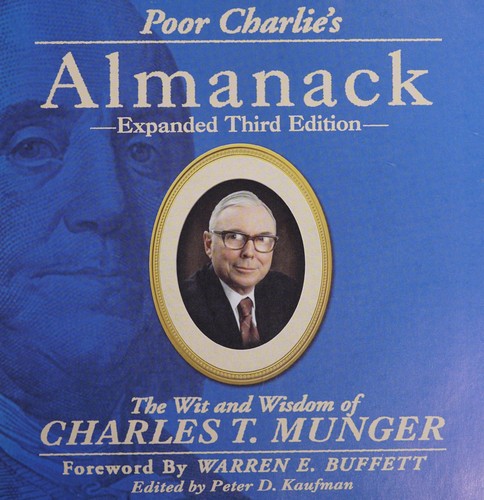
Poor Charlie's Almanack
Charlie Munger · 2005
The complete collection of Munger's speeches, including "Psychology of Human Misjudgment" and his mental models framework.
Berkshire Hathaway Annual Letters
Warren Buffett · 1965–present
Free on berkshirehathaway.com. The single best ongoing education in business analysis and capital allocation.
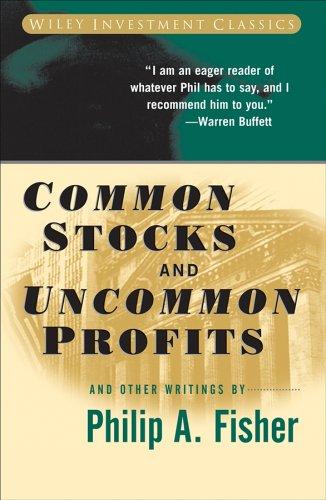
Common Stocks and Uncommon Profits
Philip Fisher · 1958
The qualitative approach — management quality, growth potential, competitive advantages. The "scuttlebutt" method.
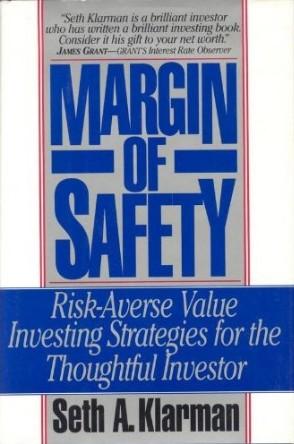
Margin of Safety
Seth Klarman · 1991
Out of print and selling for $1,500+. The modern application of Graham's principles. Focuses relentlessly on downside protection.
FairValueLabs is an independent research platform inspired by the Graham-Buffett-Munger investment philosophy. We are not affiliated with Berkshire Hathaway, the Graham estate, or any of the investors mentioned above. All analysis is generated from public SEC filings and market data. This is educational content, not investment advice.